
记录一些有意思的题目,主要来自《Convex Optimization》这本书
2.10
question 1: Restrict the set to an arbitrary line and check whether it remains convex. (This is a common method to prove the convexity of a set in $R^n$.)
question 2: Different from Question 1, this question is stricter, as it requires restricting the function to a hyperplane. To solve this type of problem, we can use the following standard technique: let $x = x_0 + Vy$,where the columns of $V$ form a basis of the hyperplane and $x_0$ is a point on the hyperplane.
2.12(f)
To prove that a set is convex, we can start from the definition and use some simple operations that preserve convexity.
For example, the intersection of any collection of convex sets is also convex.
In this question, we can try to describe $S_2$ in terms of $S_1$, since we already know that $S_1$is convex.
So our first idea is to find an operation that transforms $S_1$into $S_2$ while preserving convexity.
2.27
This question is an important corollary and deserves careful attention.
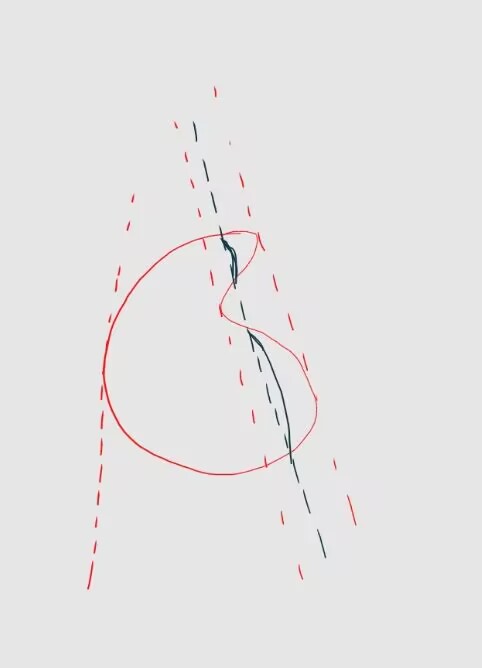
In the statement of this proposition, there is a crucial condition:"nonempty, and every boundary point has a supporting hyperplane." This means that every boundary point of the set is the unique minimizer of $y^Tx$ for some $y$ in R^n,implying that there exists a half-space containing $int(S)$.
If the set is convex, the conclusion is straightforward. Therefore, I will provide a counterexample to illustrate why the proof given in the solution is correct.
<<<<<<< HEAD
2.31(e)
Why this propsition has the condition that the set is nonempty?
Explanation:
3.4
This solution suggests that if we have two functions and know the relationship between them, and one of them is convex, we can analyze the other function by translating it into a set representation—through the use of the epigraph or hypograph—to study its properties.
3.6
=======
63cf4614fbe6841f15c778786f99bdd736d3ab35